Research
Accessible Bib
A story space in progress. Images, materials, and notes will be gathered here.
Follow the story ↓Origin
Material / experiment
Reflection
Discoveries
Touch a thread.
Academic connections
Connected publications
Design of Accessible Bibs for Dining by People with Visual Impairments
Expand detailsCollapse details
Journal of Textile Research · 47 (3), 247–254
Abstract
Website translation · Published PDF · p. 1
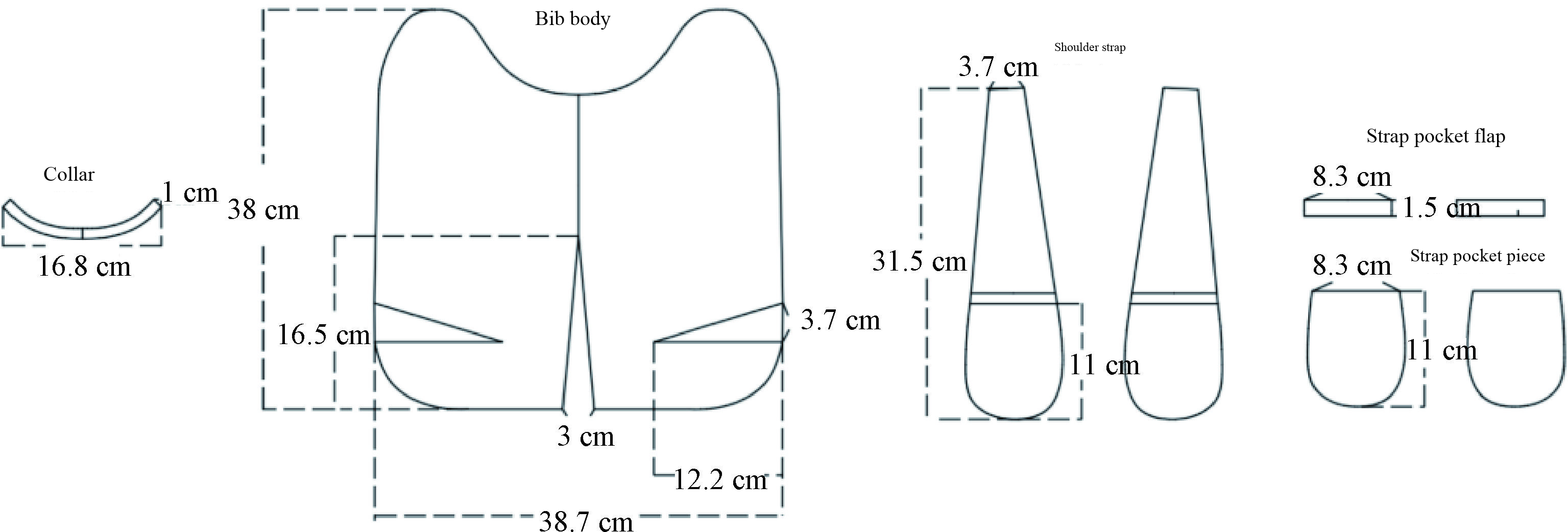
This study examines the needs and design of bibs as dining-assistance clothing accessories for people with visual impairments, addressing difficulties in wearing accessories and insufficient protection. Using mixed methods, it conducted in-depth interviews with 20 visually impaired people, collected 42 valid questionnaires, and completed 18 dining-scenario experiments. Market research identified functional requirements for bibs, which were analyzed using the Kano model. An accessible bib design was then proposed, and CLO 3D was used to simulate virtual fitting and wearing effects to verify its feasibility. Results indicate that dining barriers center on color recognition, stain detection and cleaning, structural ease of use, and personalized expression. Core needs include stain-resistant materials, ergonomic protective structures, convenient donning and doffing solutions, and personalized appearance. The resulting cape-style bib uses upturned edges, achieving a liquid-blocking delay of more than 3 s, improving liquid-guidance efficiency by over 40%, and reducing stain-spill area by 65%. Stability tests show that weights of 50–100 g reduce the bib drop rate by 82.1%–100% compared with no weight, with 80 g being optimal. The findings provide practical guidance for inclusive design of dining-assistance clothing for people with visual impairments.
Design of Accessible Bibs for Dining by
Translated titleJournal of Textile Research . 47 (3), 247–254.
Connections
Ideas continue elsewhere.
Through shared themes. These relationships are provisional.
Accessibility & Inclusive HCI